By Jacky Deng
The Society of Teaching and Learning in Higher Education (STHLE) is the preeminent national voice and a world leader for enhancing teaching and learning in higher education. Every year, STLHE organizes a national conference that brings together educators, researchers, and students from across Canada to discuss and explore new innovations and emerging challenges in higher education.
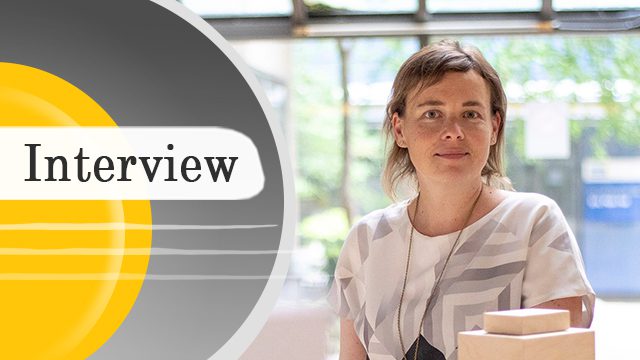
I spoke with Dr. Terri Peters (Associate Professor, FEAS) to learn about her first experience at the 2025 STLHE Conference.
Q: What drew you to attend STLHE this year?
Over the last year as a Teaching Fellow, I made it my goal to learn more about the methods and research areas relating to the Scholarship of Teaching and Learning (SoTL). I have been thinking about how I see my own work in researching and teaching to better understand the student experience in architecture education. I wanted to gain knowledge and experience the SoTL community in Canada, and I wanted to get feedback on new ideas, building on what I’ve done.
At different teaching and learning events, I kept hearing colleagues mention STLHE as the biggest and best Canadian conference about scholarship of teaching and learning. People call it “stelly” and finally I figured it out! I looked into it and saw that the conference has various formats, like posters, round tables, and paper presentations. I thought this event could be a way to get feedback about an upcoming project and encouragement about the next steps in SoTL publishing. I submitted work for a roundtable presentation about a recent study I did about the student experience in architecture education.
This year about 425 people attended STLHE and there were presentations by different institutions across Canada and a few from the US too.
One thing that really struck me was just how friendly this community is.
Dr. Terri Peters
Q: Were there any particular sessions or conversations that stood out to you? Why?
The three keynotes were all really inspiring, the one by Dr. Niigaan Sinclair on the first night really stood out as he is an engaging storyteller. He has an amazing career as an educator, he is an award-winning author (I ordered his book as soon as I got home and it is excellent), and he really inspired everyone with his optimism and thoughtful approach to Canada’s future and how education is a big part of it. Another major highlight was the talk by Dr. Melanie Hamilton, who has a really fun, humorous conversational style of speaking. She shared some relatable and inspiring stories about her career path and teaching career and anecdotes about how different events and situations have shaped her career as a nurse, nursing educator, and renowned SoTL scholar and educator.
Q: What new ideas or practices did you discover at STLHE that you’d like to bring back to your own teaching or research?
I have lots of new ideas from the sessions at STLHE to bring into teaching. For example there were several sessions on innovative assessment that looked at some really important issues, including technology, engagement, student stress and wellbeing, AI, etc. One session was especially memorable, focused on a feedback/feed-forward approach. This was presented by Dr. Tracey Snoddon and Amelia Graham; they talked about results of their work testing ways to design assessments for large classes so that students can demonstrate how they learned from and engaged with feedback during their learning process. That way of thinking will be really useful in my own teaching. In terms of research, there was a really good interactive session on publishing led by Dr. Violeta Iosub, Dr. Riley Petillion, and Dr. Anita Acai who presented example of abstracts and topic area that people submit to the Canadian Journal for the Scholarship of Teaching and Learning (CJSoTL). We got to think about how to frame a good, publishable submission and we got a better understanding of how papers are evaluated by working with examples and brainstorming together.
Q: What advice would you give to someone considering attending STLHE for the first time?
My advice would be to attend the Pre-Conference Workshops. I attended two. One was “What is SoTL? An Introduction to the Scholarship of Teaching and Learning from SoTL Canada” by Dr. Andrea Webb and Dr. Alice Kim. It was so helpful. There were a range of attendees, from those who were actually new to SoTL to those that had done a number of SoTL studies. It was interactive; not just a lecture, but more of a working session where the facilitators asked people to explain their experiences and connect to shared material. I learned a lot about key terms (scholarly teaching vs discipline-based educational research (DBER) vs SoTL), different methods people use and why, and I also met some interesting researchers from across Canada who I went out for dinner with afterwards. It set the tone for a really good week. The other Pre-Conference Workshop I participated in was very relevant to my Teaching Fellows project about professional identity. It was led by Dr. Taylor Raiche and Dr. Kirsten Bazylak from University of Saskatchewan’s School of Pharmacy. They presented about their work in fostering professional identity in their students, and in the workshop, they talked through their approaches in the context of Miller’s Pyramid level (Knows, Knows How, Shows How, Does, and Is). The workshop format was great. It was interactive, and I found the examples they shared of their experience designing and planning orientation sessions, as well as follow up sessions for students in professional programs, really relevant to my work in our professional program in architecture.
Q: How did attending STLHE impact your perspective as an educator/scholar?
One thing that really struck me was just how friendly this community is. The architecture and building science conferences I normally go to are great, but they are much more narrow in scope, less interactive, and they aren’t even nearly as social and collaborative as this one. At STLHE, it seemed like most people attending were collaborating regularly with others at different institutions, and many of the research sessions were presented by people in different academic disciplines that were drawn together by an enthusiasm and interest in SoTL. At the various coffee breaks and poster sessions, I had many long conversations with different researchers and have had follow up calls with a few after the conference as well. I think one reason might be that SoTL researchers come from all disciplines, not people who are trained in any one field. So there seems to be a real openness to learning about other ways of doing things and other perspectives. It felt like a conference for people who love learning, not just for those who love teaching!
Dr. Terri Peters is an Associate Professor in the Department of Architectural Science where she teaches in both the architecture and building science programs. She is a registered architect in the UK and holds a PhD in Architecture from Aarhus Architecture School in Denmark. She is a member of the University’s Teaching and Learning Spaces Working Group, completed a two year course of teaching development instruction in 2021 called the University Teaching Development Program (UTDP), has been the recipient of two TMU Learning and Teaching Grants from CELT. She has won awards for teaching including the 2025 Dean’s Teaching Award. In her research, she utilizes architectural design and building science methods to examine how building design impacts people’s experience of spaces, exploring the experiential qualities to understand how architecture can contribute to enhancing people’s well-being. As a current TMU Teaching Fellow, her research into pedagogy aims to uncover ways in which design studio learning spaces, particularly those used in architecture programs, can positively influence student collaboration.
Dr. Jacky Deng is an Educational Developer at the Centre for Excellence in Learning and Teaching, where he leads the Teaching Fellows program and Scholarship of Teaching and Learning (SoTL) programming. He also leads program evaluation for the TA/GA & Graduate Teaching Development Program, supports the Excellence in Teaching Program, and serves as the Faculty Liaison for the Faculty of Engineering and Architectural Science (FEAS). Jacky is a Vanier Scholar who has led national and international projects focused on improving and studying equity, diversity, and inclusion (EDI) in education and research. He is an Associate Editor for the Canadian Journal for the Scholarship for Teaching and Learning (CJSoTL) and a member of the Canadian Society of Chemistry’s Working for Inclusion, Diversity, and Equity (WIDE) Committee. In addition to teaching, learning, and research, Jacky loves basketball, running, and music.