Submitted by Carol Ducharme

Resource:
5 ways teachers can respond to residential school denialism in the classroom | The Conversation
By Lindsay Gibson, Assistant Professor, Social Studies and History Education, Department of Curriculum and Pedagogy, Faculty of Education, University of British Columbia, and James Miles, Assistant Professor, Faculty of Education, University of Alberta
As we approach National Day for Truth and Reconciliation (NDTR) and Orange Shirt Day in this country, a dark trend is emerging. There have been a number of incidents and growing discourse that is deliberately rejecting, downplaying, and misrepresenting the historical facts about the Canadian Residential School System. It is useful for educators to have resources to respond to denialism in their classrooms and support efforts to continue working towards the Truth and Reconciliation Calls to Action. The following article was published in the Conversation and shared on Academica Forum, Indigenous Top Ten.
Authors Gibson & Miles (2026) compiled ways for confronting denialism in the article 5 ways teachers can respond to residential school denialism in the classroom. They note that “Residential school denialism is entering or circulating within school communities across Canada in worrisome ways”.
The authors further state that denialists “use varied arguments, rhetorical strategies and fallacies”. Using these strategies, the authors further explain, it misrepresents and rejects the truth by “misrepresenting or minimizing basic facts and evidence about residential schools, undermines truth and reconciliation efforts, protect the status quo and defend guilty parties”. The authors highlight problems if this issue if left unaddressed leading to serious consequences on many levels related to Canadian history, the Residential School System evidence, distorted classroom learning, and disrespecting the evidence of survivor testimonies.
As a way for educators to navigate this issue of “urgent importance”, Gibson & Miles offer five ways for teachers to address denialism in the classroom:
- Deconstruct: Useful to critically analyze denialists interpretations used to persuade
- Detect: Recognizing it
- Debunk: Checking claims and the evidence for misinformation
- Disregard: Some claims do not deserve attention
- Debate: Useful in exposing faulty reasoning when discussed, compared, and evaluated
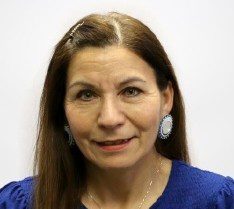
Carol Ducharme is the Educational Developer, Indigenous Pedagogies and Curriculum with the Teaching Development team at the Centre for Excellence in Learning and Teaching at Toronto Metropolitan University. Carol is a Saulteaux community member of Keeseekoose First Nation. Her work is grounded in relational values, lived experience, and the Indigenous perspectives and teachings received through relationships with Elders, Knowledge Keepers, communities, and learners. Her experience spans across post-secondary education, Indigenous community engagement, faculty development, and project management. She currently teaches part-time in Indigenous Studies at Durham College.